

.jpg)
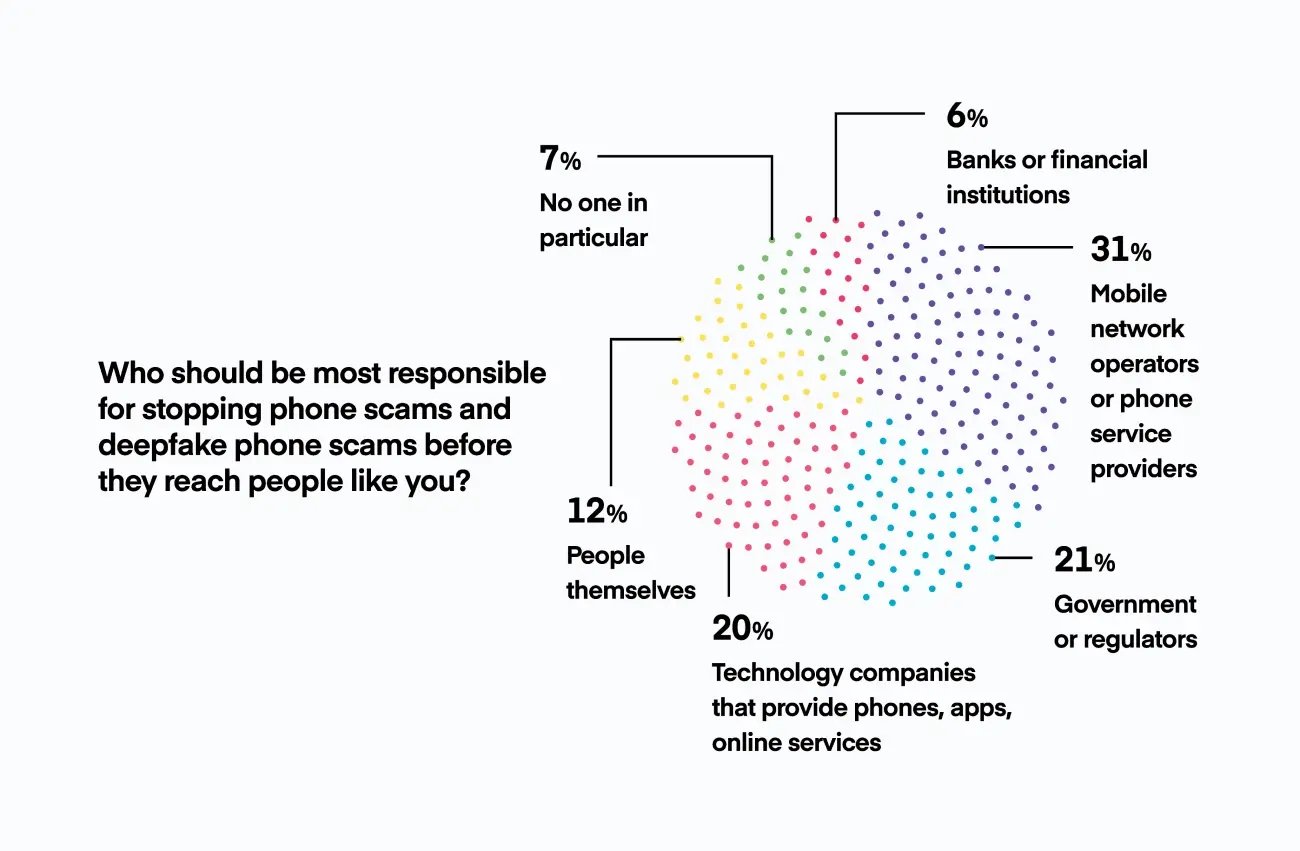
In a survey of more than 12,000 consumers for Hiya’s State of the Call 2026 report, consumers were asked who should be most responsible for stopping phone scams. Their answer: mobile network operators.
The reality is that the battle against fraud calls is fought on many fronts. It’s a combined effort that includes law enforcement, governmental regulators, technology companies, and mobile network operators. But it’s clear that consumers feel that mobile network operators should take the lead role.
Nearly a third of respondents (31%) said mobile network operators should have the primary role, while only 21% said it should be the government’s role, and 20% say tech companies should be most responsible.
Respondents included consumers in the US, Canada, UK, Spain, France and Germany — about 2,000 from each country.
In this blog post we take a look at Key Finding #3: Subscribers believe mobile network operators should be responsible for protecting them against voice fraud. We featured Key Finding #1 and Key Finding #2 in previous blog posts, and will cover the other two findings in future posts.
Download the State of the Call 2026 report >
Consumers say network operators should be subject to stronger regulations
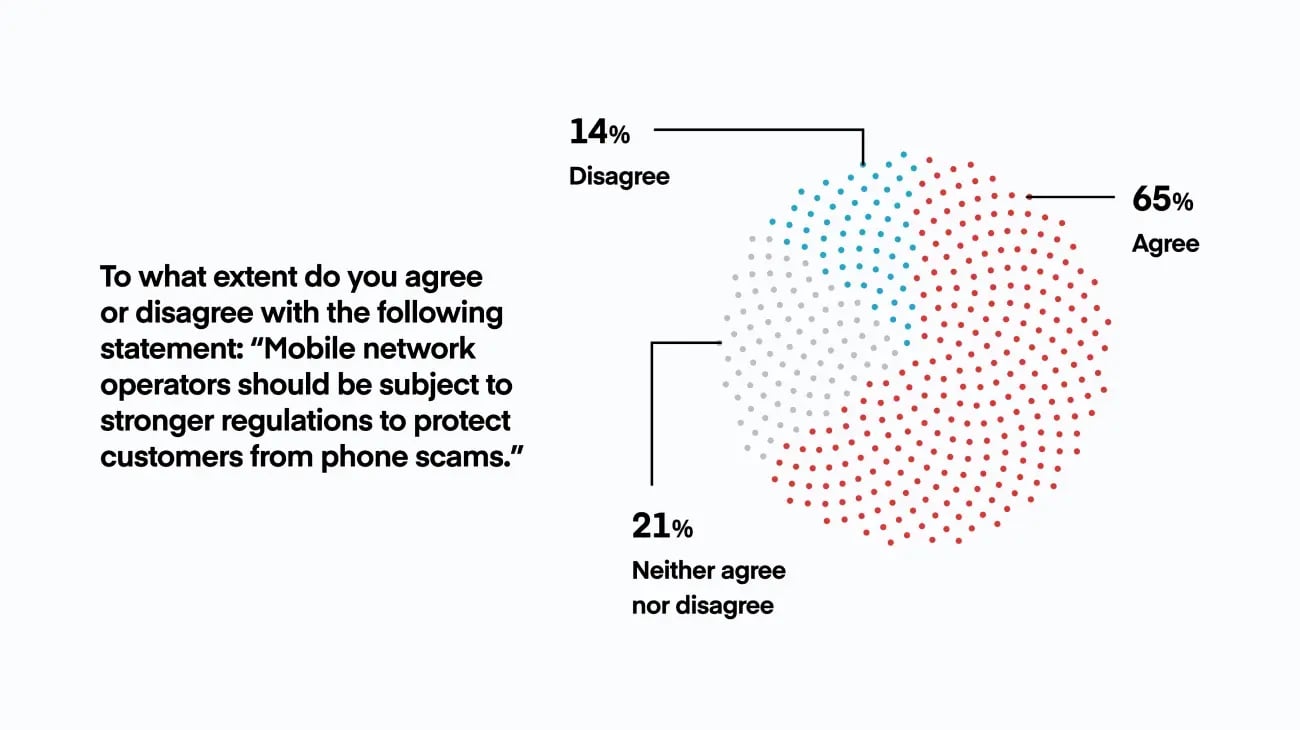
Assigning primary responsibility to mobile network operators, it’s not surprising that the majority of consumers (65%) felt that MNOs should be subject to stronger regulations.
Who should pay for financial losses?
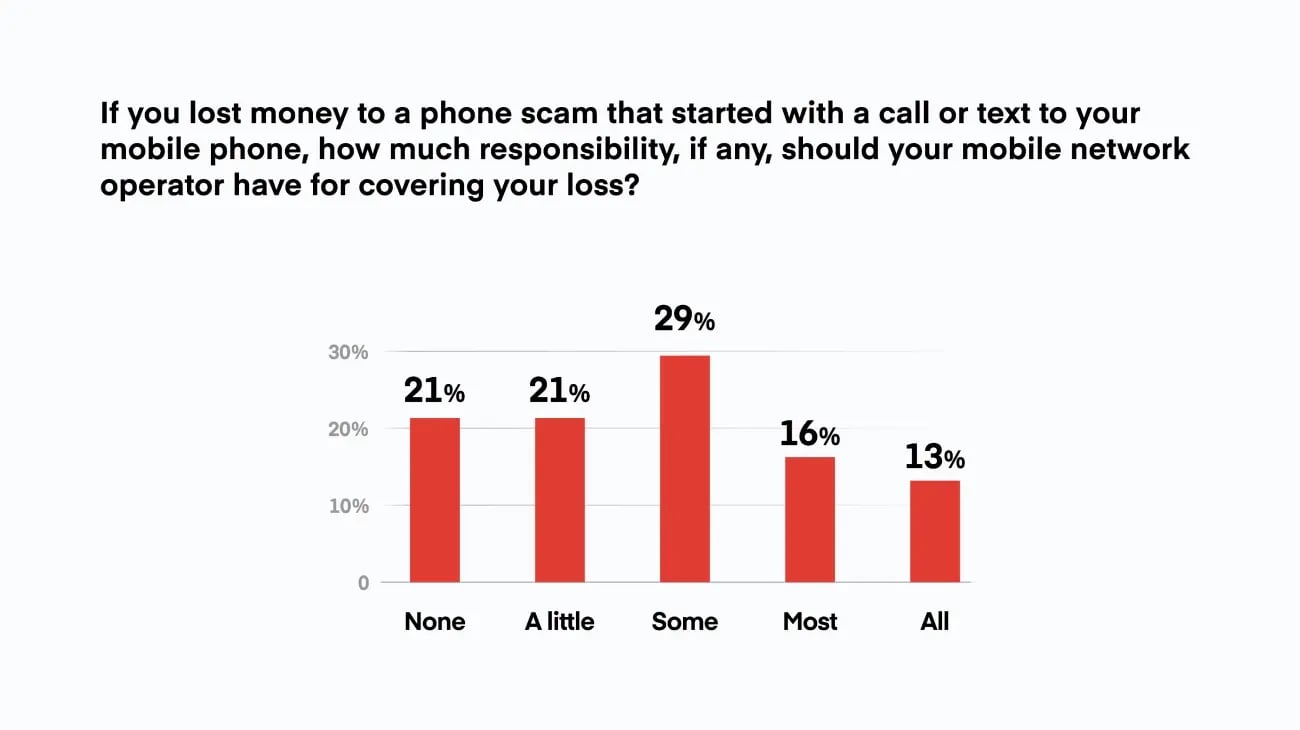
Not only do consumers believe that mobile network operators should be the ones leading the fight against fraud calls, but they also feel that MNOs should have some financial responsibility when their subscribers lose money as a result of a phone scam. More than half of respondents (53%) said they think MNOs should cover at least some of the loss, and 13% believe MNOs should bear the full cost.
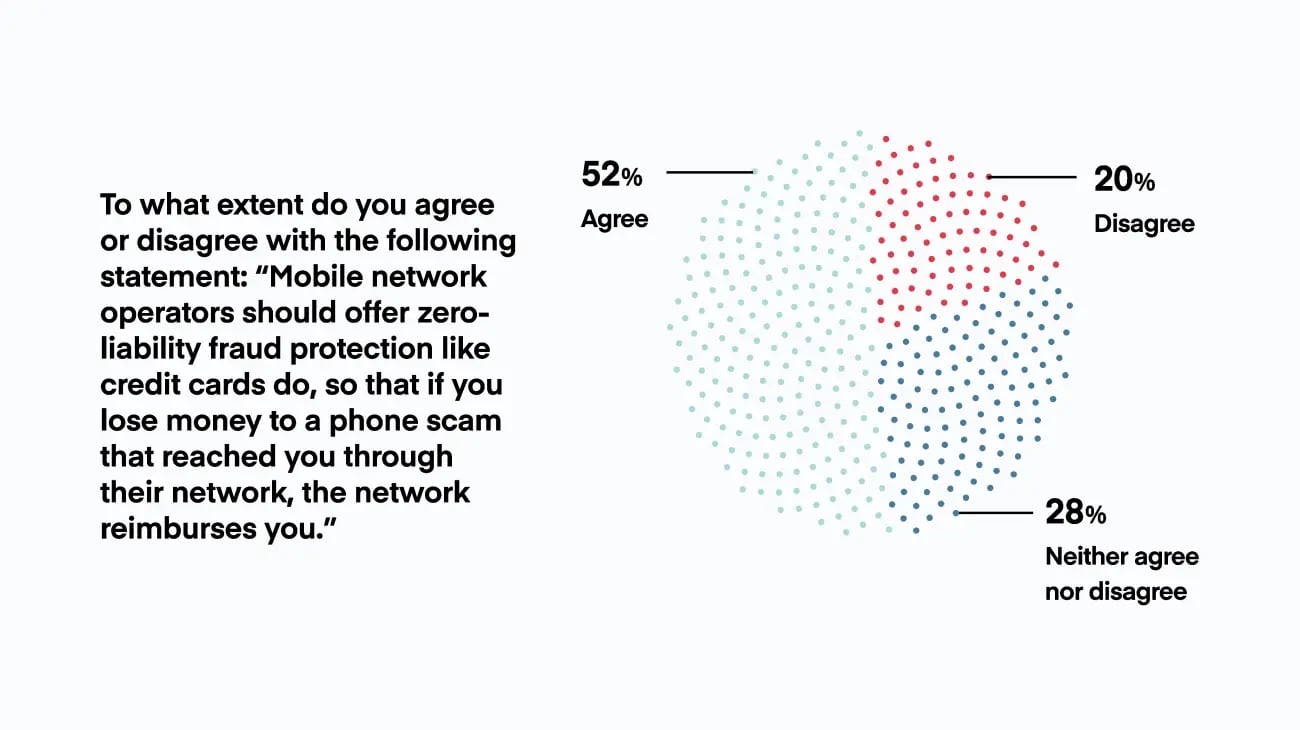
Other consumers take a harder line. More than half (52%) say that MNOs should offer zero-liability fraud protection like credit cards do, so if subscribers lose money to a phone scam that reaches them through a certain network, that same network would reimburse them.
In addition to the five key findings, the report also makes a number of recommendations, both for mobile network operators who deliver the calls, and for businesses seeking to connect with their customers and prospects.
Recommendations for mobile network operators
- Add spam and fraud protection at the network level to protect subscribers.
- Use AI-powered spam protection to fight back against AI-powered scams — including deepfake voice threats.
- Promote your spam protection services to your subscribers, as it is a key differentiator.
Recommendations for businesses
-
Add branded caller ID so consumers will know exactly who is calling.
-
Register your business numbers with mobile networks that deliver your calls.
-
Protect against inbound call attacks by adding AI voice detection.