



As a business that relies on customer connections, every outbound call represents an opportunity—to close a sale, support a customer, or build a relationship. But what happens when your calls aren't even being answered? If you're experiencing declining pickup rates, your phone numbers might be displaying spam labels that are turning customers away before you even have a chance to speak.
Why your business should care about call perception
In today's communication landscape, how your calls appear to recipients can make or break your business relationships. When you check your phone number reputation status, you're essentially auditing one of your most critical business assets—your ability to reach customers directly.
Consider this: according to Hiya’s data, consumers worldwide receive more than 100 million unwanted calls daily. This overwhelming volume of spam has made people extremely cautious about answering unknown numbers. When your business calls display warning labels like "Potential Spam" or "Likely Nuisance," customers assume the worst and decline your calls.
The result? Wasted time, lost revenue opportunities, and frustrated teams who can't connect with the people they need to reach.
How business phone numbers get labeled as spam
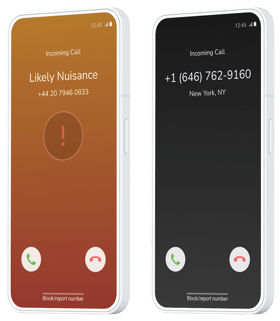 Understanding how spam labels appear is crucial for prevention. Carriers use sophisticated spam analytics systems that evaluate multiple factors:
Call pattern analysis: Systems monitor calling behaviors like volume spikes, rapid-fire dialing to unrelated numbers, and unusual calling times. Legitimate businesses can inadvertently trigger these systems during marketing campaigns or busy periods.
Recipient behavior: When people consistently hang up quickly, block numbers, or report calls as spam, these negative interactions create a reputation history that affects future calls.
Business is not registered with carriers: Businesses who have not registered their numbers with carriers using a solution such as Hiya Number Registration can appear suspicious to carriers’ spam detection systems, which prioritize protecting consumers from unknown entities.
The hidden cost of unanswered calls
Every missed connection represents lost potential. Whether it's a sales prospect who doesn't pick up, a customer who misses important service updates, or a client who can't be reached for time-sensitive matters, spam labels directly impact your bottom line.
Beyond immediate losses, there's the operational cost of repeated attempts, extended campaign timelines, and team frustration when legitimate business communications are blocked by spam filters.
Caller Reputation: the industry’s first transparent view into spam labeling
If you’re not sure if your business calls are being labeled as spam, you’re not alone. Many businesses experience dropping answer rates and impacted revenue, but without visibility, there’s no way to improve.
Caller Reputation changes that. For the first time, businesses can see their status, understand what drives it, and take action with data — not guesswork.
How Caller Reputation works
Once you register your phone numbers through Hiya's Number Registration, Caller Reputation automatically evaluates each one with two layers of insight:
- Spam Status
Each number shows a risk level — low, moderate, or likely spam. If Hiya detects a specific spam type (like robocall or survey), you’ll see that too.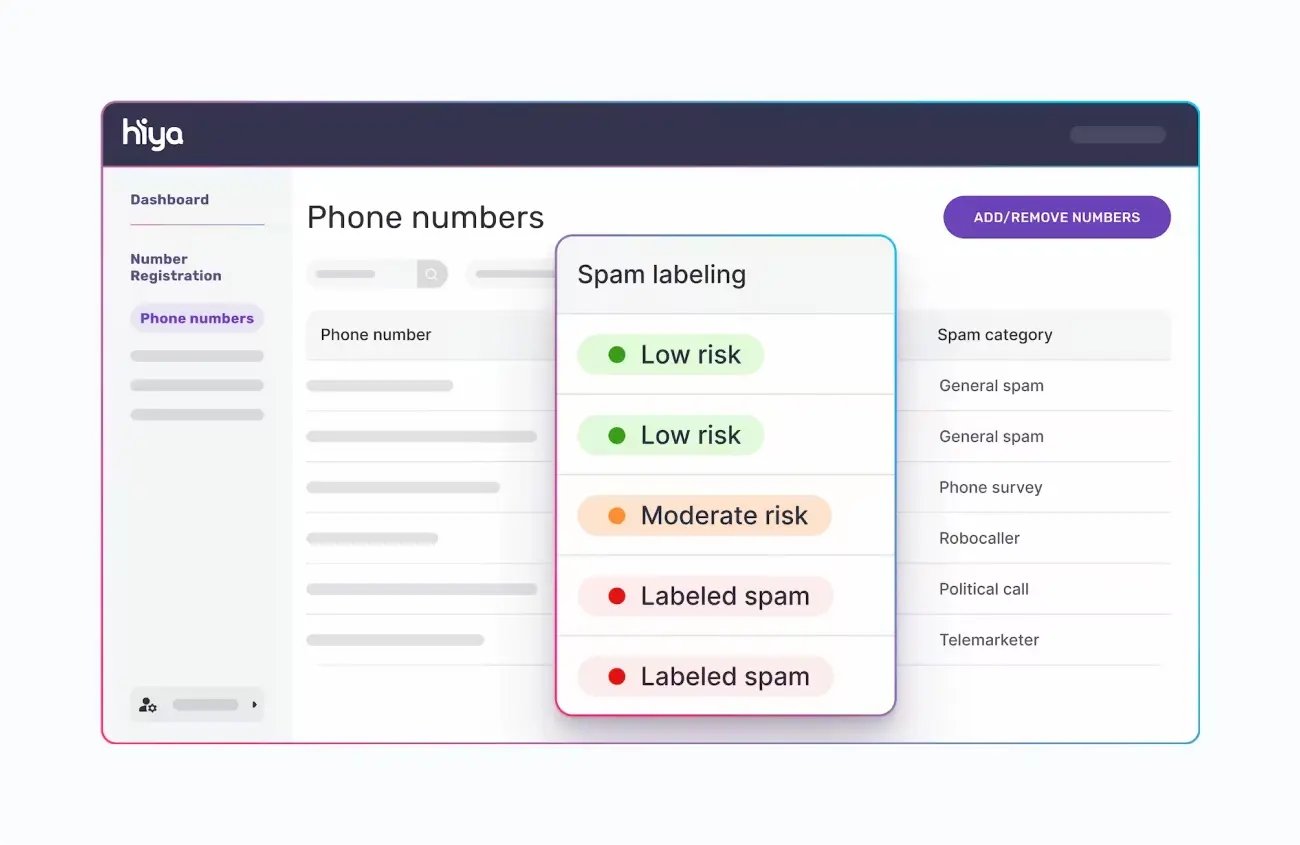
- Reputation report card
For numbers with enough call history, you’ll see performance across four key factors that influence spam labeling:
- Maturity: Do you use established numbers, without rotating?
- Connection: Do recipients choose to answer your calls?
- Engagement: Are recipients staying on the line after answering your calls
- Sentiment: Do recipients rarely complain about or block your calls?
Each factor is graded A to D, giving you a clear snapshot of your reputation. A low grade shows exactly where to focus — from spotting early warning signs to adjusting your practices with data, not guesswork.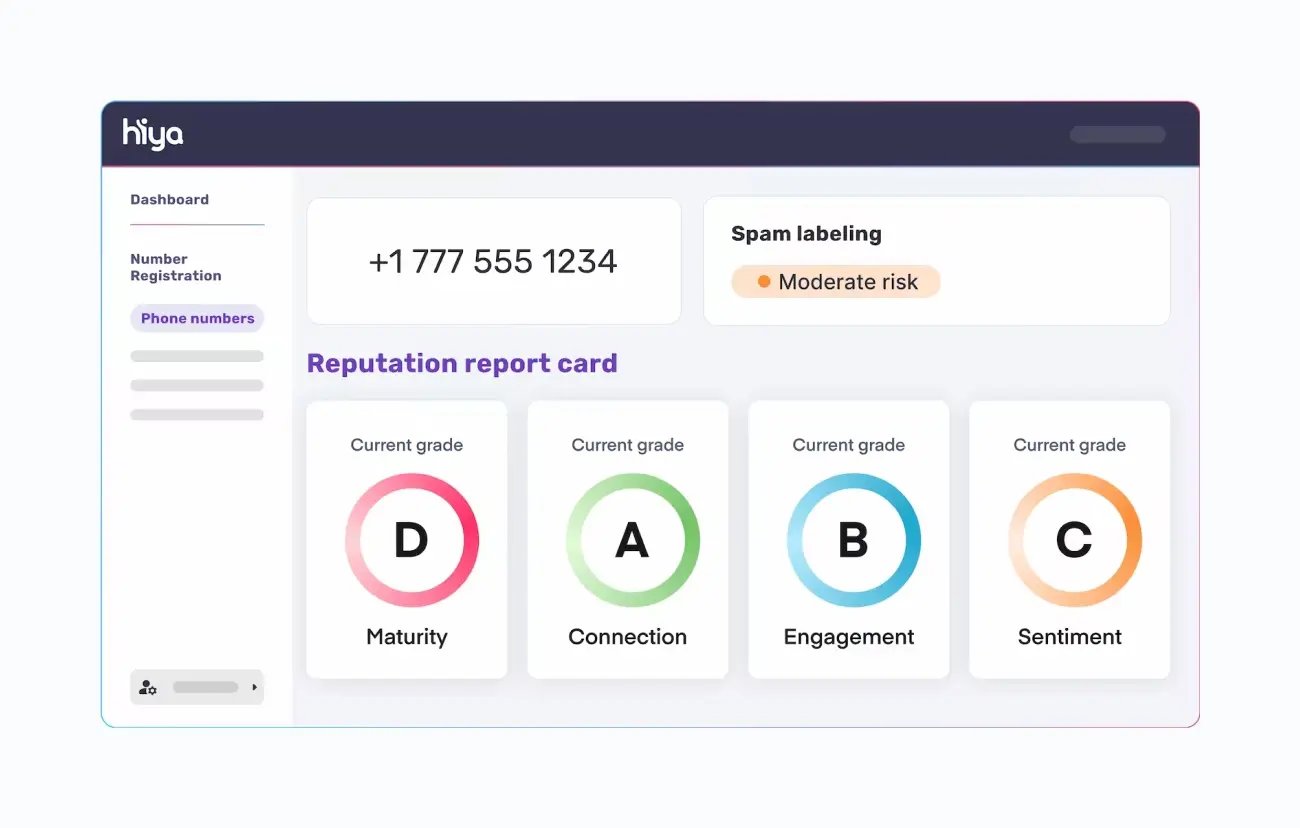
Check out our guide The Definitive Guide to Caller Reputation
How to check your phone numbers – Professional consultation
For the most comprehensive analysis, businesses making over 2,000 calls monthly should consider professional call inspection services that can show you exactly how your numbers appear across multiple networks and devices.
Hiya offers a free call inspection to see what your customers and prospects see when you call them. This professional assessment provides detailed insights across major carriers and can identify call deliverability issues before they impact your business.
How to check your phone numbers – Do-it-yourself
You can check your phone number yourself, it just involves a more manual process — but it will certainly be worth the effort you put into it. Here’s what to do:
Step 1: Conduct a business caller ID test
Start with a comprehensive caller ID test across different networks:
-
Gather test devices: Collect phones from different phone carriers (ex: T-Mobile, Rogers, EE) and/or using different caller ID apps (Hiya Spam Blocker & Caller ID, TrueCaller, Nomorobo, etc.).
-
Call from your business lines: Have colleagues call from your business numbers to these test devices.
-
Document what appears: Record exactly what caller ID information displays, including any warning labels.
Step 2: Check phone number online
Several methods allow you to check phone numbers online for reputation issues:
-
Search your numbers: Enter your business numbers in search engines to see if they appear on spam databases.
-
Monitor caller ID app databases: Check if your numbers have been reported on consumer complaint apps such as the Hiya Spam Blocker app and TrueCaller.
Step 3: Analyze call reports
Review your call reports for warning signs of phone number reputation or call deliverability issues:
-
Track answer rates: Calculate pickup percentages over time. Sudden drops often indicate call deliverability issues.
-
Monitor call duration: Extremely short calls may suggest call recipients are having a negative experience with your agents.
-
Identify pattern changes: Look for correlation between call metrics and campaign performance.
Take action: Register your numbers to reduce spam labeling
Once you've identified potential issues, the solution is proactive number management:
Business number registration is the most effective way to establish legitimacy with mobile network operators. When you register your numbers with the mobile networks that carry your calls, you're providing transparency that their analytics systems value, significantly reducing the risk of false positive labels.
You can register your business numbers for free with Hiya Number Registration to establish yourself as a legitimate caller across major mobile networks. This registration works in 40+ countries and provides ongoing protection for your business communications.
Important considerations
While these checking methods provide valuable insights, keep in mind that operator analytics systems are constantly evolving, and results can vary by operator, region, and time. The most effective approach combines regular monitoring with proactive reputation management.
Protect your business communications today
Don't let spam labels silently sabotage your business communications. Take action today.
-
Register your business numbers for free – Let mobile networks know you’re a legitimate caller.
-
Monitor your spam status with Caller Reputation (also free) – Check current spam status of your business phone numbers and take steps to improve.
-
Get a free call assessment – Meet with a Hiya call visibility expert to learn how your calls appear to customers.
-
Move beyond unknown numbers – Your registered number is less likely to be labeled Spam, but consumers pick up calls they recognize. Get Branded Calling today to improve answer rates.
%20-%20Feature@2x.jpg)