

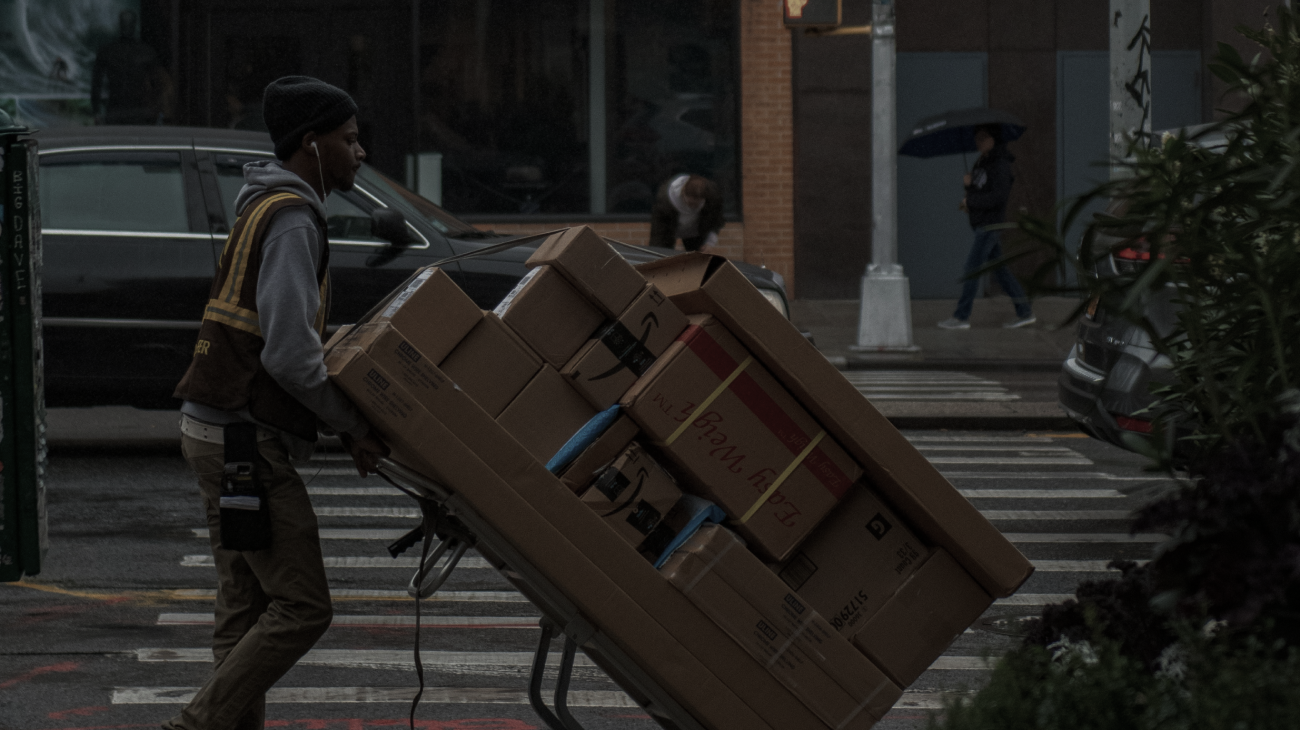
The holiday season is right around the corner. With it comes an increase in package deliveries — and unfortunately, an increase in package delivery scams. With so many of us sending and receiving packages, a phone call about a missed package delivery might not seem unusual. But don’t get caught off guard.
How package delivery scams work
There are a variety of motives in package delivery scams. The scammer might call saying there has been a problem with delivery and they need the correct address. With a confirmed name, address and phone number, the scammer might go on to commit identity theft. Or, a fraudster might say additional postage is due, in an effort to obtain a credit card number.
In the U.S., the Better Business Bureau is alerting consumers about new variations on package delivery scams. In a warning titled Don’t scan QR codes on unexpected packages, the BBB says scammers will send packages with no return address. If the recipient scams the QR code to see who sent the package, it could lead them to a phishing site that steals their personal information or downloads malware to their device.
Another variation is the brushing scam. With this scam, an unscrupulous retailer sends an unsuspecting consumer an item through Amazon or another online shopping service. The recipient then becomes a “verified buyer” and the retailer uses the consumer’s name to write a glowing online review of the product, which can lead to greater sales. The downside is knowing that someone has your name, address, and possible phone number — and the BBB warns, “Once the information is online, it could be used for numerous crooked enterprises.”
Tracking volumes of package delivery scams
Hiya is able to track not only the volume of package delivery scams, but also the names of delivery services that are impersonated most often. Consumers using Hiya’s spam protection service through their mobile carrier, device manufacturer, or Hiya’s mobile apps, can tap their phone to report a call as spam, and they can also leave a comment about the nature of the call. Those comments help Hiya identify specific scams.
Hiya has users in more than 40 countries, but for this blog post, we’re going to look at package delivery scams in three major markets: the United States, UK and Canada. We’ll look back at last year’s data so we can see how these scams track throughout the full holiday season.
Package delivery scams in Canada

Delivery scams in Canada follow a typical pattern. They are certainly present at all times of the year, but they begin to climb as the holiday season approaches. Last year delivery scams peaked about a week before Christmas. Most common were general delivery scams, which don’t specify a specific delivery company, followed by the impersonation of Canada Post, UPS, DHL, and FedEx.
Sample comments from Canada:
“Supposedly I have a package and they need to "confirm" all my details.”
“Pretending to be Canada Post: Your package is on hold due to security reasons. To contact Canada Post press 1.”
“Scam call for UPS delivery, asking for credit card info.”
Package delivery scams in the United States

Just as we saw in Canada, package delivery scams in the US hit their peak in December. Summer is also a busy time for package delivery scams in the US. Many online retailers offer special deals in what would typically be their slower months, and scammers are there waiting to trick anyone who might be expecting a delivery.
In the US, most common were general delivery scams, where a particular company is not mentioned, followed by impersonations of FedEx, UPS, United States Postal Service, and DHL.
Sample comments from the US:
“Tried to act like USPS and said they had a delivery that they could not deliver and asked for address and banking information.”
“UPS calling to take my personal info for a package delivery.”
“Claiming to be FedEx and wanting payment for duties.”
Package delivery scams in the UK
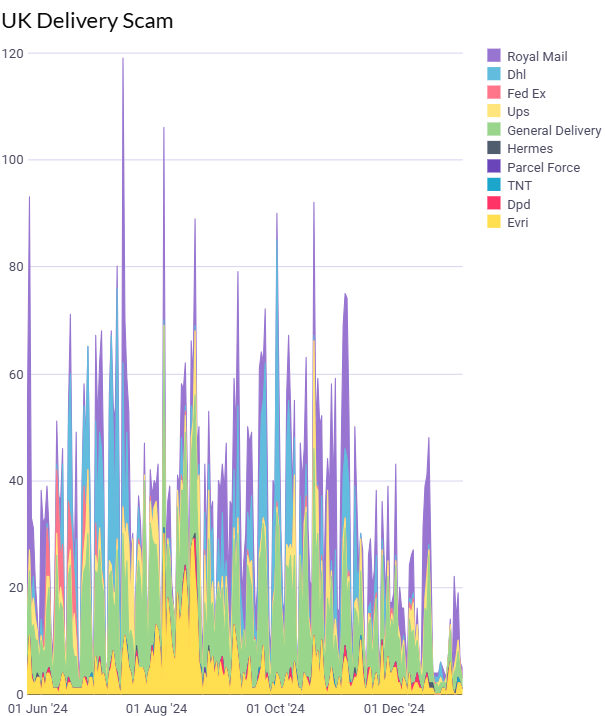
Delivery scam trends are different in the UK. They do not build throughout the year and peak during the holiday season. In fact, delivery scams actually drop in December. Instead, delivery scams ebb and flow throughout the year, and hit their peak in mid-July. Amazon Prime Day is July 16-17 in the UK, so that could explain the July peak.
General delivery scams are the most common in the UK, followed closely by Royal Mail scams. Fraudsters also impersonate DHL, Evri, and UPS.
Sample comments from the UK:
“Pretending to be Evri, claiming there is a parcel that needs details updated. Fishing for name, address, bank details, email address, etc."
“Recorded message with a woman's voice, American accent, saying its Royal Mail with an international delivery. Obviously a scam/fraud.”
"Pretended to be from parcel depot and got my card details.”
How to avoid package delivery scams
How can you avoid being scammed by delivery imposters? Experts recommend keeping good records of any packages you have ordered, and where you have ordered them from. Also, when checking on package deliveries, always use the delivery service’s official website or phone number — never use a link that arrives via text message or a phone number provided in a robocall.
But the best way to avoid package delivery scams is to prevent them from reaching your phone in the first place. Hiya can help you do that.
For mobile phone carriers, there’s Hiya Protect, a complete call protection solution that enables carriers to block fraud calls and label suspected nuisance calls to protect subscribers.
For individuals who do not have spam protection through their mobile phone carrier, there’s the Hiya Spam Blocker app, which can be downloaded from the App Store and Google Play. For business professionals and employers with bring-your-own-device policies, Hiya recommends the Hiya AI Phone app, which features real-time scam protection, AI-voice and deepfake protection, AI-assisted call screening, and call summaries and transcripts.